
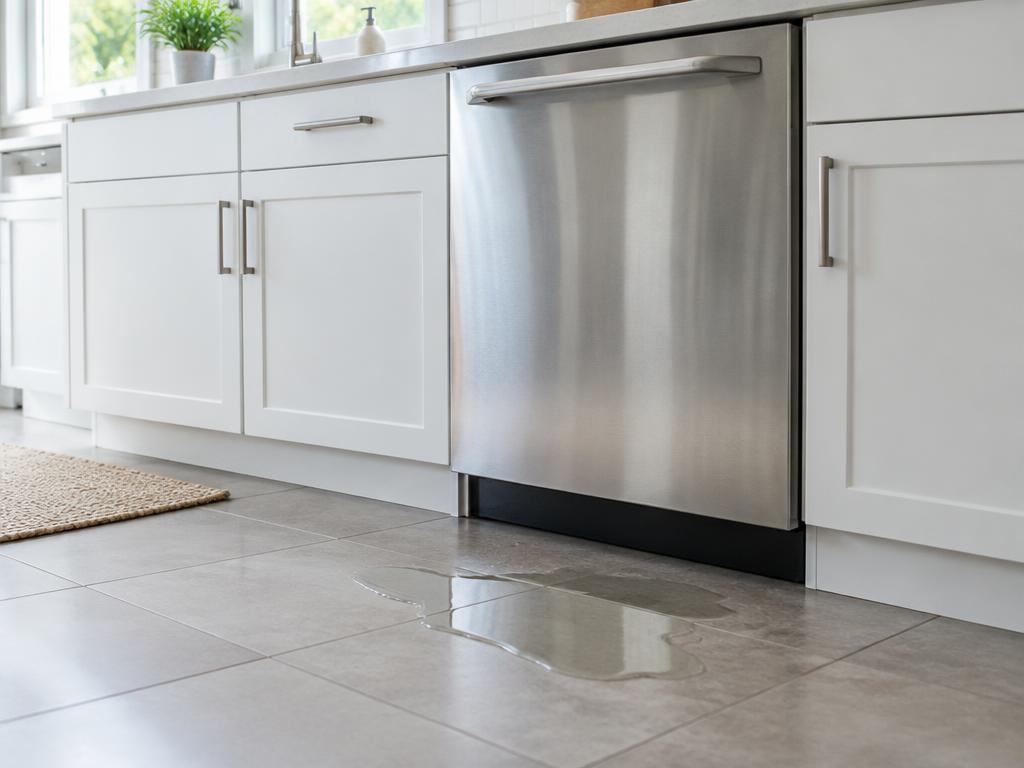
A puddle at the base of a dishwasher is more than an inconvenience. Water can move under flooring, into cabinets, or around nearby electrical connections. For homeowners in Longmont and surrounding Northern Colorado communities, a dishwasher leak should be addressed promptly, even if the appliance still completes a wash cycle.
Quick answer: A dishwasher may leak because of a damaged door gasket, loose or damaged water connection, drain hose problem, misdirected spray, excessive suds, or a failing internal component. Stop the cycle, turn off the water supply if safely accessible, and identify where the leak seems to appear before using the dishwasher again.
First Steps When You Notice Water on the Floor
Stop the dishwasher according to the manufacturer's instructions. If the appliance is leaking continuously, close its water supply valve if you can reach it safely. Keep children and pets away from standing water, especially near outlets or appliance wiring. Dry up accessible water only when there is no electrical hazard.
Do not restart a leaking machine just to see whether it happens again. A small drip can grow into a larger leak, and moisture can collect behind cabinetry without being visible from the front.
Where Dishwasher Leaks Often Begin
Around the door
A damaged, dirty, or displaced gasket may allow wash water to escape. Overloading the front rack or placing large items in the path of spray can also redirect water toward the door. Inspect the visible seal after the machine is off and cool. Clean obvious food residue gently, but do not stretch or alter the gasket.
Under the dishwasher
Water below the appliance may come from a supply connection, drain hose, pump, tub seal, or another internal component. The location of the visible puddle does not always identify the origin because water can travel along the underside before reaching the floor.
At the sink cabinet
Dishwasher supply and drain connections often pass through the adjacent cabinet. A leaking connection under the sink can look like a dishwasher problem. Check safely visible connections for moisture, without loosening fittings or pulling on hoses.
During particular parts of the cycle
A leak that appears during filling may differ from one that develops during draining. Water near the door while spray arms operate may suggest a different source again. Note the timing, but do not repeatedly run the machine to recreate a leak when water damage is possible.
Causes That Are Easy to Overlook
Too much detergent or the wrong product
Hand dishwashing liquid is not made for automatic dishwashers and can create excessive suds. Even dishwasher detergent can cause problems when used incorrectly. Suds may push water past seals and make a machine appear mechanically damaged. Use only dishwasher-approved detergent and follow both product and appliance instructions.
A damaged spray arm
A cracked or blocked spray arm may direct a forceful stream of water at a door seam instead of distributing it properly around the tub. Inspect only the user-accessible portions described in the manual.
A drain restriction
A clogged filter or hose can contribute to improper water movement and certain leaks. However, a leak is not always caused by a blockage. Avoid assuming that pouring chemicals into the dishwasher will solve the issue; harsh drain chemicals can damage appliance components.
How a Technician Diagnoses Dishwasher Leaks
A repair professional can inspect the door closure, water inlet, pumps, tubing, and internal seals while following the model's diagnostic procedures. Depending on the cause, a repair may involve a gasket, hose, connection, or another component. The purpose of diagnosis is to find the actual source before replacing parts.
Prepare the brand and model number, note when you first saw water, and describe whether the puddle appears at the front, side, or under the sink. Pictures taken from a safe location can also help document the problem.
Protect Your Kitchen While You Arrange Repair
After shutting down a leaking dishwasher, check nearby cabinets and visible floor edges for moisture if you can do so without approaching any electrical hazard. Towels can help contain a small accessible puddle, but they are not a repair. If water has reached under flooring or into a cabinet base, consider appropriate drying or property-restoration help to prevent lasting damage.
Documenting the leak location and time may also help if the repair involves a household plumbing connection rather than an internal dishwasher part. Do not leave the water valve open if a supply leak is suspected. If water continues to spread despite shutting off the appliance, seek plumbing assistance promptly.
Frequently Asked Questions
Can I keep using a dishwasher that only leaks a little?
It is safer to stop using it until the source is identified. Small leaks can cause hidden damage to flooring and cabinetry over time.
Why does my dishwasher leak only when it drains?
A drain hose, connection, or pump-related issue may be involved. A professional may need to inspect the drain path and surrounding plumbing.
Can loading dishes incorrectly cause a leak?
Yes. Large utensils or incorrectly positioned items may interfere with spray arms or redirect water toward the door. Proper loading matters, but persistent leaks still require investigation.
Schedule Dishwasher Leak Repair in Longmont
If there is water below your dishwasher, do not wait for damage to spread. Woelfel Appliance Repair services dishwashers in Longmont and surrounding Colorado communities. To request information about an inspection, visit our contact page or call 303-481-2363.
Explore our repair services or contact Woelfel Appliance Repair to request service.