
Opening the dishwasher should mean clean plates and clear glasses. Instead, some Longmont homeowners find a chalky white film, water spots, or cloudy glassware after a full cycle. It is easy to assume the appliance is broken, but several different causes can produce similar-looking results.
Quick answer: White residue may come from minerals in the water, too much detergent, inadequate rinsing, or a dishwasher that is not circulating or heating water correctly. Permanent glass etching can also look cloudy. Start by identifying whether the film can be removed before scheduling repair.
White Film and Permanent Cloudiness Are Not the Same
A mineral deposit often appears as a powdery or chalky layer that can be removed with an appropriate cleaner. Etching is wear on the glass surface itself, usually linked to detergent chemistry, soft water conditions, or washing temperature. Etched glass may stay cloudy even after cleaning.
For a simple test, hand-wash one affected glass following the glassware manufacturer's care guidance. If the cloudy coating disappears, deposits are likely involved. If the cloudiness remains, the surface may be etched rather than dirty. Do not use abrasive scrubbers that could scratch the glass.
Common Causes of Cloudy Dishes
Mineral content in household water
Minerals such as calcium and magnesium can remain on dishes after water evaporates. Water hardness varies by address and water source, so it is better to check your utility's water quality information or test your water than assume every Northern Colorado home has the same conditions.
Incorrect detergent amount or type
More detergent does not always mean cleaner dishes. Excess detergent can leave residue, particularly when paired with different water conditions or short wash cycles. Use a dishwasher detergent formulated for the machine and follow the product and appliance directions.
Not enough rinse aid
Rinse aid helps water sheet off dishes rather than form droplets. If your dishwasher has a rinse-aid dispenser, check its level and settings. It may be especially helpful when persistent spots appear on glassware. Adjust it only within the manufacturer's recommended range.
A dirty filter or blocked spray arm
A dishwasher filter captures food particles, while spray arms distribute water across the dishes. If the filter is clogged or the spray arm cannot rotate freely, glasses may come out with leftover residue or food. Remove and clean only user-serviceable parts described in the appliance manual.
Poor water heating or circulation
When water is not heated or circulated correctly, detergent may not dissolve or rinse away as intended. A defective heater, circulation pump, sensor, or water inlet component could be responsible. This is where a professional dishwasher diagnosis becomes valuable.
What to Check Before Calling a Repair Technician
First, clean the dishwasher filter according to the manual. Inspect accessible spray-arm holes for visible buildup without damaging them. Make sure tall utensils or pots are not blocking spray-arm movement. Confirm you are using a dishwasher-specific detergent and the correct amount. If your appliance has a rinse-aid dispenser, refill it as directed.
Run a normal cycle with properly loaded dishes and compare the results. Do not mix cleaning chemicals or combine vinegar with bleach-containing products. If you want to use a dishwasher cleaner, select one approved by the appliance manufacturer.
When White Film Signals a Dishwasher Repair Problem
If residue persists despite correct detergent use and a clean filter, look for other symptoms. Are dishes still gritty? Is the water cold at the end of a cycle that normally heats? Does the dishwasher make a new grinding sound, stop mid-cycle, or leave standing water? Those clues may point to a mechanical or heating problem rather than water chemistry alone.
A technician can check water filling, circulation, wash temperature, and relevant sensors. That is often more effective than trying multiple detergents when the underlying issue is a malfunctioning appliance.
Loading Habits Can Improve Wash Results
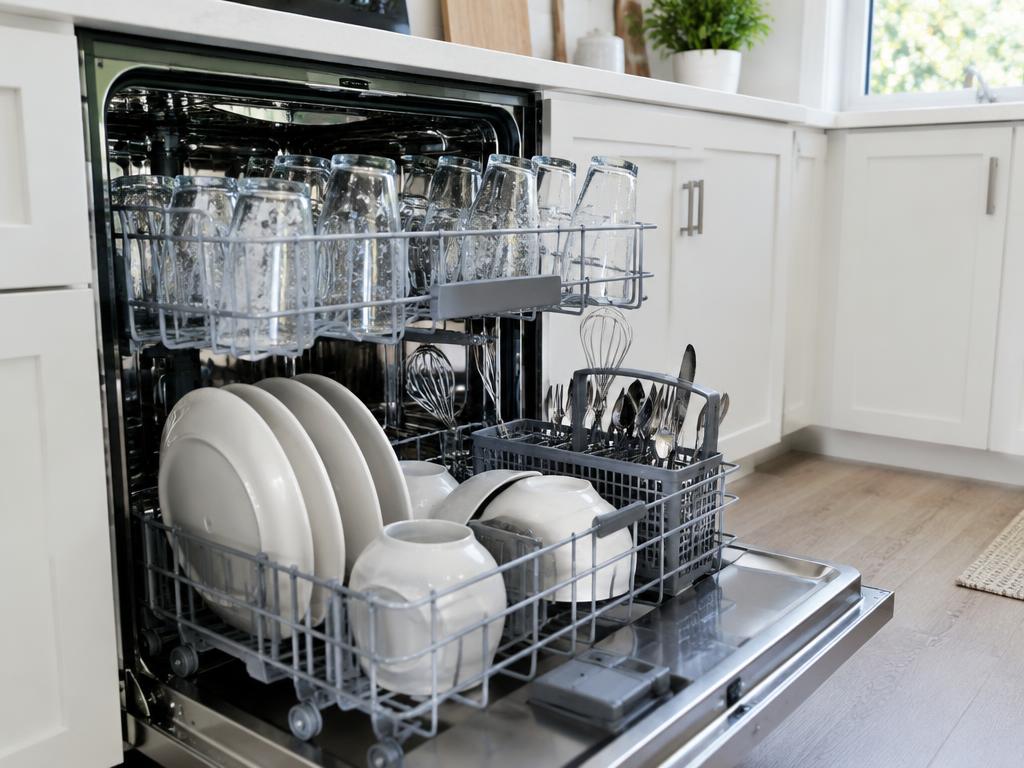
Before diagnosing a dishwasher as broken, make sure dishes are loaded the way its manufacturer recommends. Bowls placed too close together can trap rinse water, while tall pans may block a spray arm. Glasses that nest tightly against each other can hold droplets that dry into noticeable spots. Leave enough space for water to reach every surface.
Also consider whether a quick cycle is appropriate for the load. Short programs are convenient, but their intended soil level and cleaning performance differ by model. A normal cycle with proper detergent, enough rinse aid where recommended, and well-spaced dishes provides a better comparison when evaluating a cleaning problem. If that cycle still leaves gritty residue, professional testing may be needed.
Frequently Asked Questions
Can hard water damage a dishwasher?
Mineral buildup may affect certain components over time. Regular manufacturer-approved cleaning and suitable detergent practices can help manage deposits, but persistent performance problems deserve inspection.
Why are only my glasses cloudy?
Glass often shows spots more clearly than plates. Certain glassware may also be vulnerable to permanent etching. Check whether the film can be removed before assuming a mechanical problem.
Should I use more dishwasher detergent if dishes look dirty?
Not automatically. Too much detergent can contribute to residue. Check the filter, loading, water conditions, and product instructions first.
Get Dishwasher Repair in Longmont and Nearby Communities
Cloudy dishes are frustrating, but the right fix depends on the cause. Woelfel Appliance Repair provides dishwasher diagnostics and service for households in Longmont and surrounding Colorado communities. If simple steps do not improve cleaning performance, visit our contact page or call 303-481-2363 to inquire about repair.
Explore our repair services or contact Woelfel Appliance Repair to request service.