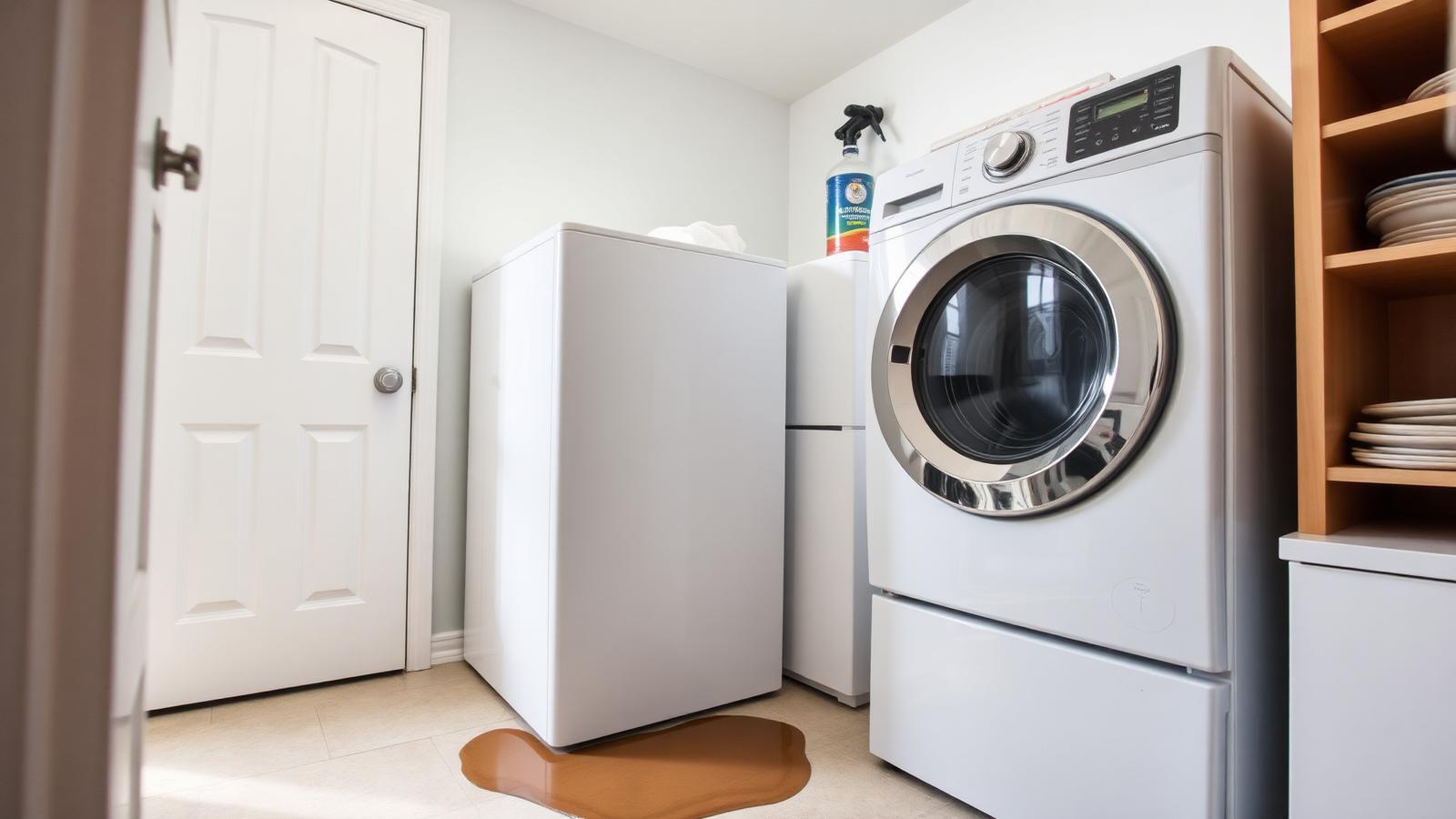
Water around a washing machine should always be taken seriously. Even a small leak can spread beneath the appliance, damage flooring, reach nearby walls, or create slippery conditions in the laundry room.
The source is not always the washer itself. Water may come from a loose supply hose, a backed-up household drain, too much detergent, a damaged door gasket, or an internal pump.
For homeowners in Greeley and nearby Northern Colorado communities, identifying when the leak occurs can provide an important clue. Use this guide to narrow down the possible cause and determine when professional washer repair is needed.
What to Do Immediately When a Washer Leaks
Stop the cycle as soon as you notice water. When it is safe to do so:
- Turn off the washing machine
- Unplug it without stepping into standing water
- Close the hot and cold water supply valves
- Keep children and pets away from the area
- Use towels or a wet vacuum to contain the water
- Check whether water is approaching an outlet or electrical cord
Do not touch the washer, plug, or outlet while standing in water. Turn off the circuit at the electrical panel when water is near electrical components and you can reach the panel safely.
When Does the Washing Machine Leak?
The timing of the leak can help narrow down the problem. A leak while filling may involve supply hoses, hose washers, the water inlet valve, or the detergent dispenser. A leak while washing may come from a front-load door gasket, excess detergent, an overloaded tub, or a loose internal hose. A leak while draining or spinning may involve the drain hose, drain pump, or a clogged household standpipe.
Common Causes of a Leaking Washing Machine
1. Loose or Damaged Water Supply Hoses. Cracks, worn washers, loose fittings, and bulging hose sections can cause leaks while the washer fills. Inspect the visible hoses with the water turned off.
2. A Blocked, Loose, or Damaged Drain Hose. The drain hose carries used water from the washer to a standpipe or utility sink. A loose hose may slip out during draining, while a damaged or kinked hose may leak under pressure.
3. The Household Drain Is Backing Up. Sometimes the washer pumps water correctly, but the household standpipe cannot handle the flow. Gurgling, slow drainage, or overflowing water may indicate a plumbing blockage rather than an appliance failure.
4. The Front-Load Door Gasket Is Dirty or Damaged. Front-load washers use a flexible rubber gasket to seal the door. Lint, hair, detergent residue, coins, and small pieces of clothing can prevent the gasket from sealing.
5. Too Much Detergent Is Creating Excess Suds. Using too much detergent can create foam that interferes with normal washing and draining. This is especially common when regular detergent is used in a high-efficiency washer.
6. The Washer Is Overloaded or Unlevel. An overloaded or unbalanced washer may shake, move, or splash water during the cycle. Confirm that all four washer feet contact the floor.
7. An Internal Pump, Hose, Seal, or Tub Is Leaking. A leak from beneath the center of the washer often requires internal inspection of the drain pump, tub seal, internal hoses, or water inlet valve.
Safe Checks You Can Perform
After disconnecting power and shutting off the water, homeowners can inspect several visible areas:
- Supply hose connections
- Accessible portions of the fill hoses
- The external drain hose
- The drain standpipe
- The front-load door gasket
- The detergent drawer
- The washer's position on the floor
- The amount and type of detergent being used
Keep in mind that water can travel along the cabinet or floor before becoming visible. The nearest wet area is not always the original source.
When to Schedule Washer Repair
Call a washing machine technician when water comes from beneath the cabinet, a hose is damaged or difficult to access, the door gasket is torn, the drain pump makes unusual noises, the machine shakes violently, or the leak returns after basic cleaning. Avoid repeatedly running test cycles, since each additional cycle may release more water and increase damage.
Get Washer Repair in Greeley, Colorado
A leaking washing machine may have a simple external hose problem or a more serious internal failure. Woelfel Appliance Repair serves homeowners in Greeley, Longmont, Loveland, and surrounding Northern Colorado areas. To schedule washer repair in Greeley, call 720-740-1919 or book an appointment through the Woelfel Appliance Repair website.