
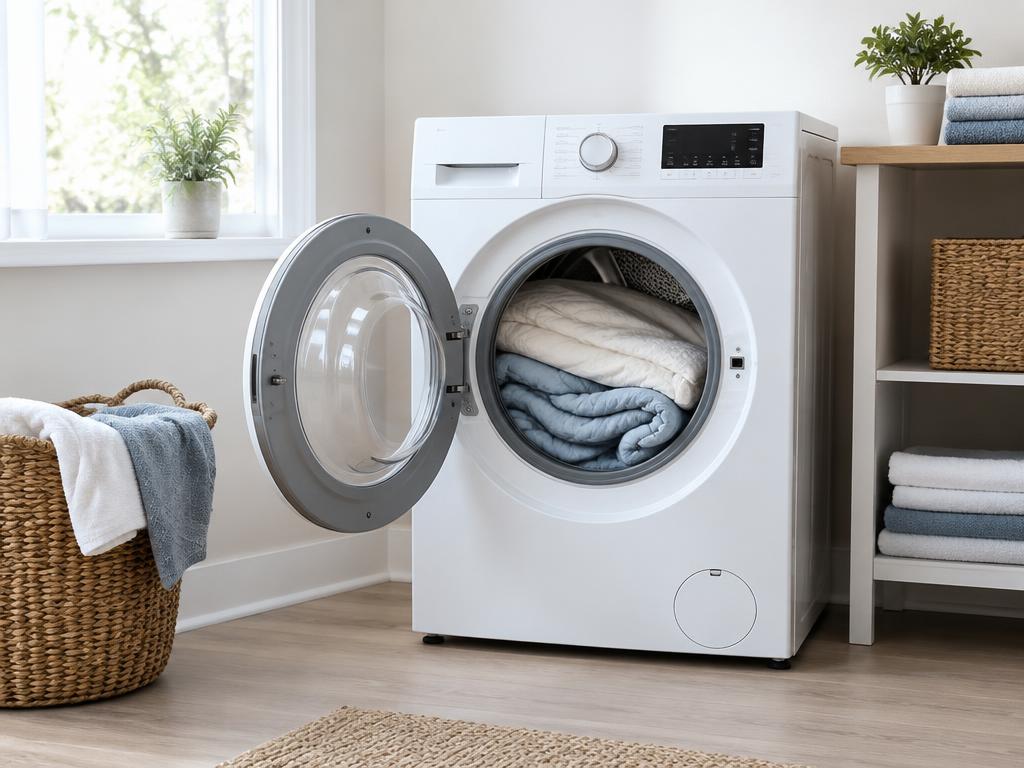
A little movement during a spin cycle is normal. A washing machine that walks across the floor, bangs against a wall, or shakes the laundry room is another matter. In Longmont and nearby Northern Colorado homes, this can interrupt laundry day and may put extra stress on the washer, hoses, and surrounding surfaces.
Quick answer: The most common reasons a washer shakes are an unbalanced load, an uneven machine, an unstable floor, or worn suspension parts. For recently installed machines, incorrect installation or shipping bolts left in place may also be factors. Start with load balance and leveling before assuming a major component failed.
First, Understand What Kind of Movement You Are Seeing
A quick shudder as the drum accelerates may be normal, depending on the appliance. Repeated hard banging, movement across the floor, or a violent spin that stops the cycle is not. Pay attention to when it happens. Does it shake only with bedding? Is every load affected? Did the problem begin after the washer was moved?
Those details are useful because a load-related problem requires a different fix from a worn suspension component. Never hold down or lean against a violently shaking washer to keep it in place.
Six Possible Causes of Washer Vibration
1. Unbalanced laundry loads
One heavy blanket, bath mat, or small load of absorbent items may collect on one side of the drum. Pause the appliance according to its instructions and redistribute the load. Washing similar-weight items together can help maintain balance. Do not overload the machine to make a load appear more even.
2. A washer that is not level
A machine resting unevenly on its feet may rock during spinning. When the washer is off and accessible, gently test whether it rocks from corner to corner. The appliance should sit stable on its installed surface. Adjust leveling feet only according to the manufacturer's instructions, with help if moving the machine is required.
3. A flexible or uneven floor
Even a correctly leveled washer may vibrate more on an unstable floor. A second-floor laundry room, loose subfloor, or uneven surface can amplify movement. The solution depends on the installation and building structure; a technician can help determine whether the issue is with the machine or the surrounding setup.
4. Shipping bolts left in a front-load washer
Some front-load washers use transit bolts to secure the drum during transport. If bolts were not removed during installation, spin cycles can produce severe vibration. Check the installation guide if the problem started with a new machine. Never remove hardware unless you can identify it correctly and follow the manufacturer's directions.
5. Worn shocks, springs, or suspension rods
Suspension components stabilize the tub as it moves. Over time, they can lose their ability to control vibration. If your washer is level and even modest loads cause heavy shaking, suspension parts may need professional inspection.
6. Drum or bearing trouble
Grinding sounds, rough rotation, or persistent banging may indicate damage beyond simple leveling. These problems can worsen with continued operation. A repair professional can check the drum support and drive system without unnecessary part replacement.
What You Can Safely Check at Home
Run through a short checklist before booking service. Confirm the load is balanced. Look at the spacing around the machine and ensure it is not hitting a wall, dryer, or nearby cabinet. Check that the feet are stable. Examine visible supply hoses for tension or leaks, but do not pull a connected washer forward by the hoses or power cord.
If the machine has moved across the floor, stop operating it until you know why. Continued movement may strain hoses and potentially lead to water damage. If you notice leaking water near electrical connections, avoid touching wet components and seek help.
When to Call for Washer Repair
Professional diagnosis is a good idea when the washer continues banging despite balanced loads, makes grinding noises, or suddenly shakes more than it used to. The same applies if it displays recurring error codes or leaves clothes unusually wet after interrupted spin cycles.
Before the appointment, note the washer's model, whether it is front-loading or top-loading, and the exact stage when vibration begins. A short video recorded from a safe distance may help illustrate the symptoms to a service provider.
Why Continued Shaking Can Become a Bigger Problem
Even when the washer finishes a cycle, repeated hard movement should not be ignored. The machine may shift enough to pull against a water supply hose, change its leveling position, or strike surrounding cabinetry. What begins as a noise complaint can then become a leak or installation issue.
For stacked laundry units, avoid trying to separate or reposition the machines yourself. They are heavy and may be secured together with a manufacturer-specific kit. If the shaking started after an installation, make the installer or repair company aware of that history. Proper setup and sound suspension components both matter for safe operation.
Frequently Asked Questions
Can an unbalanced washer damage the floor?
Repeated severe movement can damage nearby finishes or strain hoses. It should be investigated rather than tolerated, especially when the appliance shifts position.
Are anti-vibration pads enough to fix a shaking washer?
Pads sometimes reduce transmitted vibration, but they do not repair a failing suspension or correct serious leveling problems. Find the underlying cause first.
Why does my washer shake only when washing blankets?
Large items can collect on one side of the drum and create an unbalanced load. Follow the washer's capacity and bulky-item recommendations, and stop the cycle if the machine begins moving excessively.
Schedule Washing Machine Repair in Longmont
If the washer shakes hard enough to move, bangs during every spin cycle, or makes new mechanical noises, a professional inspection can help identify the source. Woelfel Appliance Repair works on residential washers in Longmont and surrounding Northern Colorado communities. Visit our contact page or call 303-481-2363 to ask about scheduling.
Explore our repair services or contact Woelfel Appliance Repair to request service.